Ezekiel Moor
- Ship
- Depth Maiden Captain
- Position
- Ballast Chainman
- Born
- 1685 · Emden
- Faction
- Naval Divers Union
- Territory
- Brine Gate Harbor
Backstory
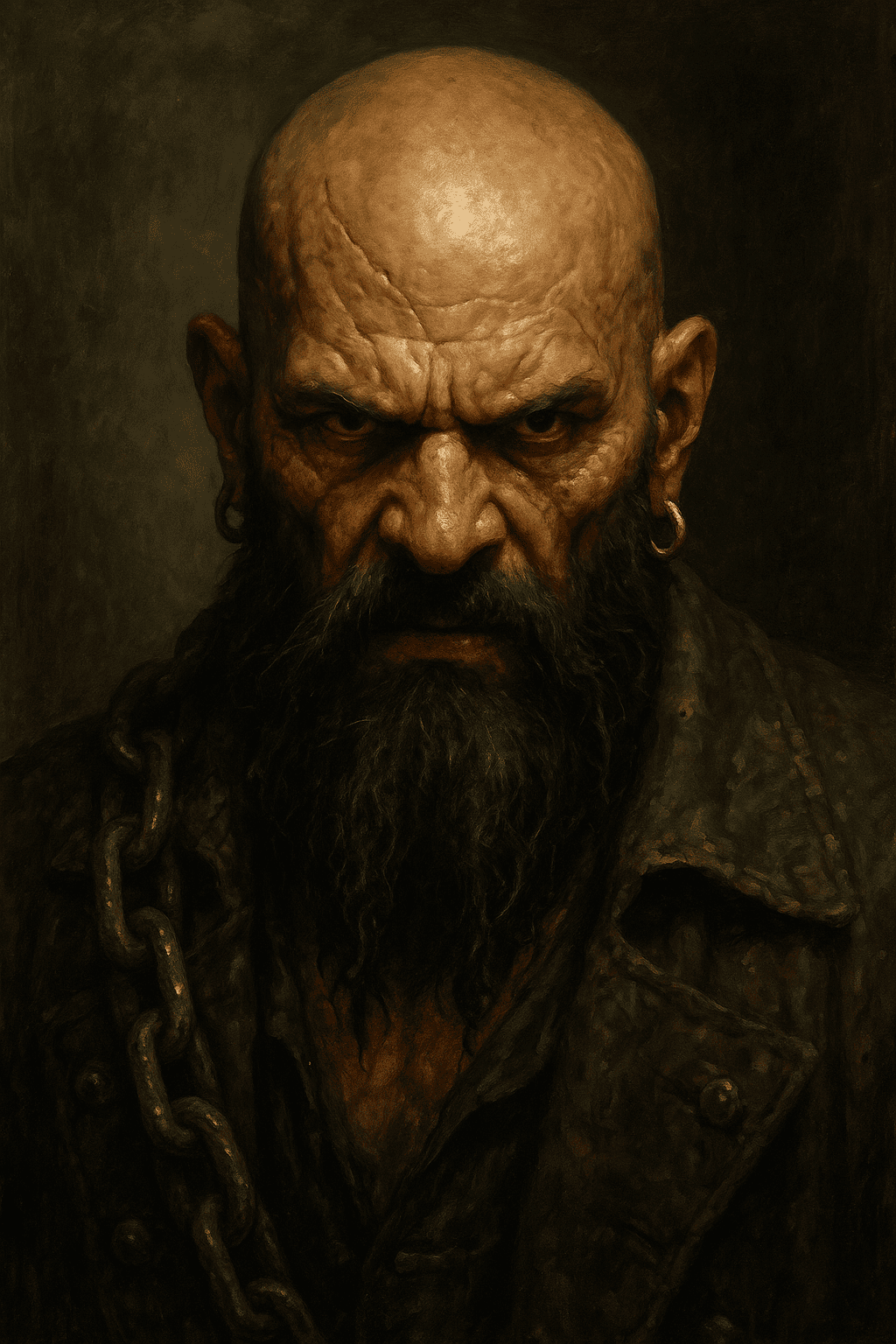
Ezekiel Moor arrived in the Caribbean already half-drowned, a gaunt English salvage diver with sunken eyes and skin the color of old bruises.
He was pulled into the Velvet Covenant1 not through violence or ambition but through sheer utility—a man who could descend where others surfaced, who could work at depths that turned lesser lungs to soup.
The Ballast Brothers claimed him early, and Gretel Boserupl Lange saw something in his silence that mirrored her own: a hunger that had nothing to do with flesh. Where his brothers Torrens and Viktor collected bodies, Ezekiel collects *years*.
Every debt is a drowning he
Every debt is a drowning he administers himself. He doesn't kill with steel; he kills with duration, with the slow compression of pressure and time, until men exhale their last breath into chains and ballast stones.
His reputation is smoke and seawater: sailors swear he ate limestone to digest his first contract, that his teeth are made of collected anchors, that he can hold his breath long enough to watch a man's eyes cloud. The truth is worse.
Ezekiel doesn't consume debts—he *preserves* them, keeps them fresh and breathing in the dark, so every defaulter knows precisely how long they have to pay.
His name in the covenant is
His name in the covenant is "Breathless," though no one can agree whether it refers to his ability to remain submerged or to the way breath catches in men's throats when they see him enter a room.
He has been underwater so many times that the sea has begun to reclaim him: his skin holds a permanent blue undertone, his lips stained purple as if he's been drinking ink, his hair thin and discolored like seaweed hung to dry.
He moves through the world as though rising from depths—not quite weightless, but displaced, a thing that should have stayed submerged finally accepting the air as a necessary evil.
His salvage gear never fully dries
His salvage gear never fully dries; he exists in a state of perpetual dampness, leaving wet prints on wood and tile, trailing the smell of brine and sunken wood. Even on land, even in taverns lit by lamplight, Ezekiel carries the cold of the abyss with him.
Gretel Boserupl Lange has called him "the most beautiful ruin she's ever kept," and whether that's love or ownership remains deliberately unclear.
**The Collector's Descent (1687):** A merchant named Hendricks owed the Velvet Covenant three years' worth of salt revenues—agreed upon, documented, sealed.
When he attempted to hide in
When he attempted to hide in Port Royal2's shallows, Ezekiel descended at midnight with chains and ballast stones. By dawn, Hendricks was secured to the harbor floor in shallow enough water that his fingers broke the surface when the tide went out.
The message took six days to fully understand: Ezekiel had left him alive, precisely positioned so Hendricks could watch the sun each morning, knowing exactly how long he had to drown. Hendricks paid in full within a week and never spoke of the experience without weeping.
**The Gretel Boserupl Adoption (1685):** Ezekiel arrived in the Ballast unit as a drifter—skilled but unmoored, a diver without crew.
Gretel Boserupl Lange recognized in him
Gretel Boserupl Lange recognized in him the same hunger she felt, the same ability to function at pressures that crushed normal men.
She initiated the sworn kin bond in the deep—they submerged together, stayed under long enough that both should have died, and surfaced as Ballast.
Whether the intimacy that followed was kinship or something that blurs the word remains unspoken between them, but the covenant knows: Gretel Boserupl and Ezekiel share a bond that makes them dangerous in tandem.
**The Purge of Salvage Row (1689):**
**The Purge of Salvage Row (1689):** A gang of wrecker-thieves attempted to steal a Velvet Covenant shipment from the docks. Ezekiel tracked the leader—a man named Crawl—into the flooded cellars beneath the warehouse district. Crawl never emerged.
What surfaced instead was his air supply, cut cleanly and left floating, and a marker stone: a message that debts could be collected even in the dark, even where no one watched. The wrecker gangs learned that year to count their affiliations carefully.
**The Silence After the Storm (1690):** Hurricane season brought a merchant vessel to wreck on the reefs.
Survivors clung to the shallows, and
Survivors clung to the shallows, and Ezekiel was sent to "recover salvage." What he recovered was a ledger—the captain's accounting of bribes paid to officials to ignore the Velvet Covenant's routes.
Instead of drowning the survivors, Ezekiel brought them the ledger and a choice: pay in person, or watch their families pay in paper. Not a single official in Port Royal adjusted their accounts that quarter. The survivors lived.
The debt never entered the covenant's books—it simply *existed*, a permanent pressure that needed no record.
**The Lover's Debt (1691):** A young
**The Lover's Debt (1691):** A young man who'd been with Gretel Boserupl Lange attempted to betray her location to rival factions. Gretel Boserupl commissioned Ezekiel for collection.
Instead of the usual drowning, Ezekiel sat with the man for three days in a sealed room, breathing synchronized with him, until the psychology of proximity and silence and mirror-breathing became its own form of suffocation.
The man confessed everything—names, locations, payment structures—and was released alive but fundamentally broken, unable to breathe deeply without hearing Ezekiel's breath beside him. Some debts, Ezekiel understands, are paid in psychology rather than corpses.
## 2026-06-07 — Admiral's Command: Added
## 2026-06-07 — Admiral's Command: Added to crew via ship profile widget — ordered aboard Depth Maiden4 under Captain Sterling Lacroix3.
## 2026-06-07 — Admiral's Command: by Admiralty's direct order \u2014 raised from Caulker to Captain. Assigned as Captain of Depth Maiden.
**The Collector's Descent (1687):** A merchant named Hendricks owed the Velvet Covenant three years' worth of salt revenues—agreed upon, documented, sealed.
When he attempted to hide in
When he attempted to hide in Port Royal's shallows, Ezekiel descended at midnight with chains and ballast stones. By dawn, Hendricks was secured to the harbor floor in shallow enough water that his fingers broke the surface when the tide went out.
The message took six days to fully understand: Ezekiel had left him alive, precisely positioned so Hendricks could watch the sun each morning, knowing exactly how long he had to drown. Hendricks paid in full within a week and never spoke of the experience without weeping.
**The Gretel Boserupl Adoption (1685):** Ezekiel arrived in the Ballast unit as a drifter—skilled but unmoored, a diver without crew.
Gretel Boserupl Lange recognized in him
Gretel Boserupl Lange recognized in him the same hunger she felt, the same ability to function at pressures that crushed normal men.
She initiated the sworn kin bond in the deep—they submerged together, stayed under long enough that both should have died, and surfaced as Ballast.
Whether the intimacy that followed was kinship or something that blurs the word remains unspoken between them, but the covenant knows: Gretel Boserupl and Ezekiel share a bond that makes them dangerous in tandem.
**The Purge of Salvage Row (1689):**
**The Purge of Salvage Row (1689):** A gang of wrecker-thieves attempted to steal a Velvet Covenant shipment from the docks. Ezekiel tracked the leader—a man named Crawl—into the flooded cellars beneath the warehouse district. Crawl never emerged.
What surfaced instead was his air supply, cut cleanly and left floating, and a marker stone: a message that debts could be collected even in the dark, even where no one watched. The wrecker gangs learned that year to count their affiliations carefully.
**The Silence After the Storm (1690):** Hurricane season brought a merchant vessel to wreck on the reefs.
Survivors clung to the shallows, and
Survivors clung to the shallows, and Ezekiel was sent to "recover salvage." What he recovered was a ledger—the captain's accounting of bribes paid to officials to ignore the Velvet Covenant's routes.
Instead of drowning the survivors, Ezekiel brought them the ledger and a choice: pay in person, or watch their families pay in paper. Not a single official in Port Royal adjusted their accounts that quarter. The survivors lived.
The debt never entered the covenant's books—it simply *existed*, a permanent pressure that needed no record.
**The Lover's Debt (1691):** A young
**The Lover's Debt (1691):** A young man who'd been with Gretel Boserupl Lange attempted to betray her location to rival factions. Gretel Boserupl commissioned Ezekiel for collection.
Instead of the usual drowning, Ezekiel sat with the man for three days in a sealed room, breathing synchronized with him, until the psychology of proximity and silence and mirror-breathing became its own form of suffocation.
The man confessed everything—names, locations, payment structures—and was released alive but fundamentally broken, unable to breathe deeply without hearing Ezekiel's breath beside him. Some debts, Ezekiel understands, are paid in psychology rather than corpses.
## 2026-06-07 — Admiral's Command: Added
## 2026-06-07 — Admiral's Command: Added to crew via ship profile widget — ordered aboard Depth Maiden under Captain Sterling Lacroix.
## 2026-06-07 — Admiral's Command: by Admiralty's direct order \u2014 raised from Caulker to Captain. Assigned as Captain of Depth Maiden.
Appearance
Ezekiel Moor wears his drownings like a second skin: bloated features pulled tight over skull, eyes watery and permanently dilated from deep pressure, lips stained a perpetual purple-grey as if he's been drinking the sea itself.
His frame is gaunt but corded with muscle—the build of a man who works against resistance, whose strength comes not from bulk but from sustained tension; he moves with the careful precision of something recently salvaged, risen but not entirely adjusted to air.
What little hair remains grows thin and discolored, greenish-white and perpetually damp, never quite dry no matter the season, textured like seaweed left to cure.
He dresses in salvage gear that resists rot—canvas and rubber, leather treated with beeswax and salt—and always leaves damp spots on furniture, a trail of moisture that speaks to time spent in pressurized depths.
Identity
- Born
- 1685
- Gender
- Male
- Nationality
- german
- Origin
- Emden
- Ship · 1725
- Depth Maiden
- Berth
- Captain
Saltwell Profile
Leadership, as the Admiral's office measures it.
Blackwater Profile
Intelligence and tradecraft, by Blackwater reckoning.
Tidecrest Profile
A woman's appraisal — of a woman as she is, or of a man as he believes himself to be.